


Pimping Black Excellence: Pamela Evette’s SC State Commencement Gambit
- Ghetto Philosopher
- Apr 29
- 13 min read

UPDATE — April 29, 2026 | 7:45 p.m. EDT
At the time of this article’s posting, Lt. Gov. Pamela Evette has reportedly been stood down as SC State’s commencement speaker, with the university moving toward selecting a new speaker after sustained student protest, alumni backlash, and public pressure. Local reporting says SC State “relents” and will pick a new commencement speaker after the Evette controversy. That matters. The protest worked. The backlash created friction. Students, alumni, and community voices forced the institution to reassess whether SC State’s sacred commencement stage should be used as campaign terrain for an anti-DEI candidate seeking statewide office. But this should be treated as a tactical victory, not the end of the operation. The broader strategy remains intact: Republican candidates will continue seeking access to Black institutions, HBCUs, churches, fraternities, sororities, civic groups, and business forums in order to soften hard-right policy positions through Black proximity. The objective is to convert “anti-DEI” into “pro-merit,” “anti-equity” into “opportunity,” and photo access into political legitimacy. SC State students may have stopped this particular maneuver, but the 2026 information battlespace is still active. Stay vigilant. The next attempt may not come wearing the same uniform.
BLUF — Bottom Line Up Front
The controversy over South Carolina Lt. Gov. Pamela Evette potentially speaking at South Carolina State University’s 2026 commencement is not just a campus dispute. It is a political optics operation, a Psychological Operation-style messaging maneuver, and an early rehearsal for the Republican Party’s broader 2026 midterm strategy.
Evette is not merely trying to speak to graduates. She is attempting to use SC State — a public HBCU with deep symbolic value — as a backdrop to reframe an actively anti-DEI political platform into something more palatable: “merit,” “opportunity,” “hard work,” and “entrepreneurship.” The strategic question is not only whether she should be allowed to speak.
The sharper question is this:
If Pamela Evette is going to use SC State for a photo opportunity, narrative laundering, and political repositioning, what exactly is SC State getting in return?
That is the missing value proposition.
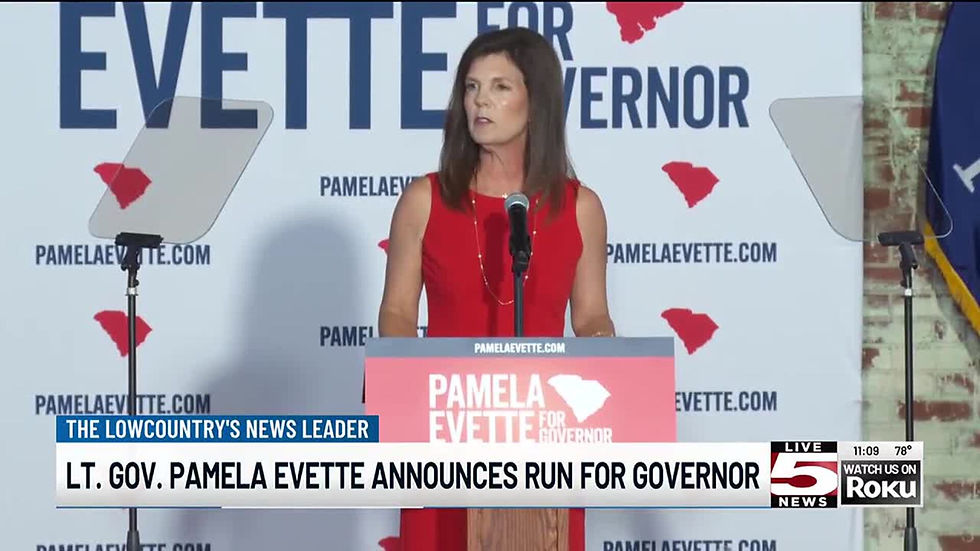
According to reporting from The State, students at South Carolina State University pushed back after university leadership planned to invite Evette as the May 8 commencement speaker, with an online petition gaining more than 2,600 signatures by April 28, 2026. The controversy centers on Evette’s support for President Trump, anti-DEI policies, immigration positions, and statements students and alumni view as contrary to HBCU values. SC State President Alexander Conyers has defended the invitation by pointing to Evette’s business background and entrepreneurial record, while Evette has publicly leaned into the fight, saying she supports eliminating DEI on campuses.
That is not accidental. That is the operation.
What Is a PsyOp?

A Psychological Operation, often shortened to PsyOp, is the planned use of information, messaging, symbols, images, narratives, and emotional triggers to influence the attitudes and behavior of a target audience.
For non-military readers, think of a PsyOp as strategic persuasion under conflict conditions. It is not just propaganda. It is not just public relations. It is communication designed to produce a behavioral effect.
A good PsyOp asks:
Who is the target audience?
What do they believe now?
What do we want them to believe later?
What emotion do we need to trigger?
What image, phrase, event, or symbol can move them?
How do we measure whether it worked?
In war, PsyOps may convince enemy soldiers to surrender, reduce public support for a conflict, undermine trust in leadership, or shape how neutral populations view one side versus another. In politics, the battlefield is not always physical terrain. Sometimes the battlefield is perception.
That is what is happening here.
Evette does not need to convert every SC State student in the stadium. That is not the center of gravity. The center of gravity — meaning the key source of power or influence in an operation — is the image produced afterward: the video clip, the photograph, the campaign post, the Fox News segment, the donor email, the quote saying she spoke at an HBCU despite “woke backlash.”
The commencement stage becomes terrain.
The graduates become visual evidence.
The HBCU becomes political cover.
How Information Operations Drive War Plans

In the military, Information Operations, or IO, are the coordinated use of information-related capabilities to influence decision-making. IO is broader than PsyOps. It includes public affairs, cyber activity, deception, electronic warfare, operational security, and narrative control.
In simple terms: war plans do not just move troops; they move minds.
Before a bomb drops, a public explanation is shaped.
Before a coalition forms, a threat narrative is built.
Before a population accepts hardship, a story is planted.
Before a policy becomes law, language is softened.
That is why information is not an accessory to power. Information is power.
Politics works the same way. A party does not simply launch a policy attack on DEI, voting rights, immigration, public education, or affirmative action and hope people accept it. First, it shapes the language. It changes “anti-DEI” into “pro-merit.” It changes “attacks on Black institutional power” into “equal treatment.” It changes “rollbacks” into “reform.” It changes “exclusion” into “fairness.”
That is the battlespace.
Evette’s appearance at SC State, if it happens, is not just a speech. It is an information operation nested inside a campaign operation. She is a Republican gubernatorial candidate running in a state where the 2026 race is already active. AP reported in 2025 that Evette launched her gubernatorial bid while emphasizing her ties to Trump, conservative policies, immigration enforcement, school choice, abortion restrictions, and opposition to “woke” politics.
So this is not a neutral invitation to a businesswoman. This is a political actor entering an HBCU space during an election cycle while carrying an ideological agenda that many students and alumni see as hostile to their institutional interests.
That matters.
Evette Is Conducting IPB: Intelligence Preparation of the Battlespace
In military planning, IPB stands for Intelligence Preparation of the Battlespace. It is the process of studying the operating environment before action begins. Commanders use IPB to understand the terrain, the enemy, the population, the weather, the routes, the risks, and the opportunities.
Translated into politics, IPB means: study the voters, test the message, identify weak points, locate persuadable audiences, and rehearse the operation before the larger campaign begins.
Evette’s SC State move fits that pattern.
She is testing whether an anti-DEI Republican can enter a Black institutional space, absorb the backlash, and still emerge with usable political material. She is watching who protests, who defends her, how the university responds, how alumni organize, how media frames the conflict, and whether the controversy helps or hurts her standing with Republican primary voters.
That is IPB.
SC State is not just an audience. SC State is a test range.
The students are not just objecting. They are revealing the resistance network.
The alumni are not just angry. They are demonstrating pressure points.
The president is not just managing a speaker controversy. He is navigating a political ambush.
The media is not just covering the fight. It is amplifying the operation.
Evette’s team can learn a lot from this single event: what language triggers backlash, what language defuses it, whether “business success” can override ideological opposition, whether HBCU leadership will absorb the institutional heat, and whether Black opposition can be reframed as intolerance.
That is valuable campaign intelligence.
This Is a Messaging Campaign in the Run-Up to the Midterms
The 2026 midterms will not only be about candidates. They will be about narrative control.
Republicans are likely to continue framing DEI as wasteful, divisive, discriminatory, and anti-merit. Democrats and civil rights advocates will frame anti-DEI politics as an attack on equal opportunity, institutional access, Black advancement, and the historical mission of HBCUs.
Evette’s appearance at SC State sits directly inside that national fight.
Her message is predictable:
“I am not anti-Black. I spoke at an HBCU.”“I am not anti-opportunity. I support merit.”“I am not afraid of tough rooms.”“Students need exposure to different viewpoints.”“The real extremists are the protesters trying to silence me.”
That is not a commencement message. That is campaign language.
This is why the “free speech” argument is too shallow. The issue is not whether Evette has the right to speak. Of course she does. The issue is whether SC State’s commencement — one of the most sacred institutional rituals in Black educational life — should be used as a political laundering facility for a candidate actively campaigning against DEI.
There is a difference between hosting a debate and staging a coronation.
There is a difference between civic engagement and political exploitation.
There is a difference between intellectual diversity and handing your institution over as a campaign backdrop.
Prelude to the Republican Party’s 2026 Playbook

This moment is bigger than Evette. She is a local expression of a national strategy.
The Republican Party’s broader 2026 plan appears to include several linked lines of effort:
First, attack DEI as a symbol of liberal overreach.
Second, use Black conservatives, HBCU appearances, and business language to soften the optics.
Third, frame resistance as censorship or intolerance.
Fourth, claim Democrats take Black voters for granted.
Fifth, seek small but meaningful gains among Black men, younger voters, entrepreneurs, and religious conservatives.
Sixth, create enough confusion around race policy to reduce Democratic enthusiasm.
This is not necessarily about winning the Black vote outright. It is about shaving margins, depressing turnout, fracturing consensus, and creating permission structures for voters who may be open to conservative economics but uncomfortable with openly hostile racial politics.
That is why the HBCU matters.
HBCUs carry moral capital. They are not just schools. They are monuments to Black survival, self-determination, academic excellence, and institutional resistance. If an anti-DEI politician can stand on an HBCU stage and receive applause — or even just complete the speech — that image becomes a political asset.
It says, “See? Even Black institutions will host us.”
That is the narrative objective.
The Lt. Governor’s Perspective: What Evette Hopes to Gain
From Evette’s perspective, this is a high-risk, high-reward operation.
She likely hopes to gain five things.
First, image softening.
Her anti-DEI platform is politically useful in a Republican primary, but potentially harsh in a broader general-election environment. SC State gives her a chance to appear accessible, open-minded, and comfortable in Black spaces without changing policy.
Second, narrative conversion.
She can attempt to convert “anti-DEI” into “pro-merit.” This is critical. “Anti-DEI” sounds punitive. “Pro-merit” sounds aspirational. The policy may not change, but the packaging does.
Third, earned media.
The backlash itself gives her attention. Local news, conservative media, social media clips, and campaign fundraising emails can all turn opposition into fuel.
Fourth, base activation.
A Republican candidate who faces protest at an HBCU can tell conservative voters, “I stood strong against the woke mob.” That message plays well in a primary.
Fifth, battlefield reconnaissance.
She gets to test her 2026 language in a contested environment before the campaign fully matures.
Her motivation is not mystery. It is strategic repositioning. She wants the optics of inclusion without the burden of policy moderation.
That is the essence of the operation.
SC State President’s Perspective: Trapped, Calculating, and Naive

SC State leadership is in a difficult position, but difficult does not mean blameless.
President Alexander Conyers appears to be making an institutional argument: Evette is a business leader, entrepreneur, and public official whose career story may offer graduates a message about resilience and achievement. WIS reported Conyers said the invitation was rooted in Evette’s record as a business leader and entrepreneur, describing her as someone whose innovation and real-world achievement align with graduates’ aspirations.
That is the charitable read.
The harder read is this: SC State may be institutionally trapped by its public status, state funding realities, political oversight, donor relationships, and the need to maintain access to power in a Republican-controlled state.
That is real.
But leadership may also be politically calculating. Inviting the lieutenant governor may be viewed internally as a way to maintain state relationships, signal neutrality, or avoid appearing hostile to Republican power. Public universities often operate under pressure that students and alumni do not always see.
Still, the move appears naive because it underestimates the information environment.
In 2026, no HBCU commencement invitation to an anti-DEI gubernatorial candidate is “just a speech.” That era is over. Every image is content. Every handshake is political inventory. Every institutional stage is a potential campaign prop.
SC State leadership should have asked one question before this invitation moved forward:
What is the exchange?
If Evette receives legitimacy, footage, proximity to Black excellence, and a chance to reframe her image, what does SC State receive?
Scholarships?
A public commitment to protect HBCU funding?
A pledge to defend SC State’s academic programs?
Support for student housing?
Investment in research?
Workforce pipelines?
Infrastructure funding?
A commitment not to use the speech as campaign content?
If none of that exists, then SC State is not negotiating. It is donating.
And if the institution is donating symbolic Black capital to a candidate hostile to DEI, students and alumni have every right to ask who authorized the transfer.
Students and Alumni Perspective: This Is About Institutional Respect

Students and alumni are not being emotional for the sake of emotion. They are identifying a breach in institutional alignment.
Commencement is not a routine lecture. It is a culminating ritual. It belongs to the graduates, their families, the faculty who carried them, and the ancestors whose struggle made HBCUs necessary.
When students say Evette’s presence does not reflect their values, they are making a values-based argument about institutional identity. Student Government President Zaria Tucker reportedly said commencement should reflect the voices, values, and lived experiences of the students being celebrated.
That matters because HBCUs were not created because America believed in pure merit. HBCUs were created because America denied Black people access while pretending the system was fair.
So when an anti-DEI politician walks onto an HBCU stage and talks about merit, students hear the historical contradiction.
They hear: “We oppose the very tools designed to address exclusion, but we still want access to your sacred spaces.”
Alumni hear something else too. They hear reputational risk. They hear their alma mater being used as political cover. They hear a public HBCU lending credibility to a politician whose broader platform may undermine the policy ecosystem that supports Black educational advancement.
The students and alumni are not rejecting dialogue. They are rejecting extraction.
The Real Question: What Is Evette’s Value Proposition to SC State?

This is where the debate should shift.
Not “Should conservatives be allowed to speak?”
Not “Are students too sensitive?”
Not “Is this cancel culture?”
The correct intelligence question is:
What is the value proposition?
If Evette wants access to SC State’s stage, what is she offering SC State’s mission?
A commencement speaker should bring more than controversy. They should bring inspiration, credibility, alignment, resources, or a concrete institutional benefit.
Evette brings political power, yes. She brings business experience, yes. She brings statewide visibility, yes. But if those assets are not converted into tangible commitments for SC State, then the university is assuming all the risk while Evette captures most of the benefit.
That is a bad deal.
If she wants the stage, SC State should demand answers:
Will she publicly commit to protecting HBCU funding?
Will she oppose any state-level effort that harms SC State’s programs under the banner of anti-DEI?
Will she support internships, procurement pathways, and workforce pipelines for SC State graduates?
Will she commit to meeting with student leadership before commencement?
Will she refrain from using SC State footage in campaign ads?
Will she participate in a moderated campus forum instead of a one-way ceremonial address?Will she explain how eliminating DEI helps Black students at an HBCU?
Without answers, the appearance looks less like leadership engagement and more like narrative exploitation.
Off-Ramps and Solutions
There are several ways out of this, but all require leadership, transparency, and strategic discipline.
Option 1: Disinvite Evette
This is the cleanest option if SC State determines the commencement platform is inappropriate for an active gubernatorial candidate with positions viewed as hostile to the institution’s values.
Risk: Republicans frame it as censorship.Benefit: Students and alumni see leadership defend the sanctity of commencement.
Option 2: Move Her to a Forum Instead of Commencement
This may be the best institutional compromise.
Let Evette speak, but not at commencement. Put her in a moderated civic forum with students, faculty, alumni, and press. If the goal is exposure to diverse viewpoints, then make it actual dialogue — not a protected ceremonial speech.
Risk: Evette may decline because the optics are less controlled.Benefit: SC State regains control of the battlespace.
Option 3: Pair Her Speech With a Student or Alumni Response
If she remains the commencement speaker, SC State should authorize a formal student or alumni response. Not a protest from the margins — an official response from the stage.
Risk: The event becomes politically tense.Benefit: The institution refuses to let one narrative dominate.
Option 4: Require a Public Explanation From SC State Leadership
The president should explain the selection process, the criteria, the institutional benefit, and whether any commitments were secured from Evette.
Risk: Leadership may expose weak planning.Benefit: Transparency reduces rumor and restores some trust.
Option 5: Create an HBCU Political Speaker Protocol
SC State and other HBCUs should develop policies for inviting active candidates and controversial political figures. The protocol should answer:
Is the speaker an active candidate?
Will the appearance create campaign value?
Will students have input?
Will the speaker be allowed to use footage politically?
Does the invitation align with institutional values?
What does the institution receive in return?
That is not censorship. That is governance.
Recommended Course of Action

From an intelligence perspective, students and alumni should not rely only on outrage.
Outrage is fuel, but strategy is the engine.
The recommended response should include four lines of effort.
First, protest with discipline.
Do not give Evette the chaotic footage she may want. Silent protest, coordinated signs, unified messaging, and disciplined media engagement are more powerful than disorder.
Second, pressure leadership through alumni channels.
Alumni should ask for the decision memo, selection criteria, and any commitments Evette made to SC State. Follow the money. Follow the process.
Third, force the value proposition question.
Every interview, post, and statement should return to this: “What is SC State getting in return?”
Fourth, convert the moment into voter registration and civic education.
If this is a 2026 messaging rehearsal, then the response must be electoral. Register students. Educate families. Track candidates. Build issue guides. Turn commencement controversy into midterm infrastructure.
That is how you counter an information operation. You do not merely react to the message. You attack the objective behind the message.
Conclusion: Do Not Be the Backdrop Without Getting the Benefit
Pamela Evette’s planned SC State appearance is not random. It is not merely a commencement invitation. It is a political optics operation inside a larger information war over race, merit, DEI, HBCUs, and the 2026 elections.
Evette gets obvious benefits: media attention, campaign footage, ideological contrast, base activation, and a chance to launder an anti-DEI platform through the visual legitimacy of a Black institution.
SC State’s benefit is far less clear.
That is the problem.
If a politician wants to stand on an HBCU stage while opposing the policy frameworks many Black educators, students, and alumni see as essential to institutional equity, then that politician should be required to bring more than talking points.
Bring resources.Bring commitments.Bring policy protections.Bring a real answer for how your anti-DEI agenda helps Black students.Bring something besides a camera crew and a campaign narrative.
Because if SC State is being used as terrain in the 2026 information battlespace, then students and alumni have every right to defend the ground.


Comments