


They’re Not Telling You the Truth About Iran

The Story Doesn’t Add Up
If three American aircraft went down inside Iran and nobody died… do you believe that?
Because that’s the story you’re being told.
Right now, Iranian state television is broadcasting footage of burned-out American military aircraft—Black Hawk helicopters and a C-130—scattered across the mountains of southern Isfahan.
The U.S. response?
We destroyed them ourselves. Mission successful. Everyone made it out.
Clean. Controlled. Reassuring.
But here’s the problem:
The more details that come out, the less that story holds up.
Because what’s being described isn’t a clean operation.
It’s chaos dressed up as precision.
And when you line up the footage, the reporting, and the broader pattern of losses across this war, one conclusion starts to emerge:
The American public is being misled about what’s actually happening in Iran.
The Story They Want You to Believe
Here’s the official version.
An F-15E gets shot down over Iran. A weapons systems officer is on the ground. JSOC operators and Pararescuemen launch a high-risk rescue.
Night Stalker helicopters insert into hostile terrain. C-130s land at a remote forward refueling point inside Iran.
Then something goes wrong.
Aircraft become “immobilized.”
Not destroyed. Not shot down. Just… stuck.
So the operators make a call:
Destroy the aircraft to prevent sensitive technology from falling into Iranian hands.
They blow up their own birds.
A second wave comes in under fire. Everyone boards. Everyone gets out.
No casualties.
Mission accomplished.
Here’s What Doesn’t Make Sense
Let’s slow this down.
Because this is where the story starts to crack.
Three aircraft “immobilized” in the same operation?
Deep inside hostile Iranian territory?
During an active combat rescue mission?
That’s not a complication.
That’s a breakdown.
And we’re supposed to believe:
They destroyed multiple aircraft
While stranded
While under threat
Then executed a flawless extraction
With zero casualties
Possible?
Maybe.
But at some point, you have to ask:
When does coincidence stop being coincidence?
The Iranian Perspective: Disputing the Rescue Narrative and Framing the War
From Iran’s point of view, the U.S. account of the pilot rescue—and the broader war narrative—looks very different.
Iranian officials have directly challenged claims that the rescue was a complete success, with some describing it as exaggerated or even deceptive. State-linked voices and military statements have portrayed the operation as a partial failure, alleging that multiple U.S. aircraft and drones were shot down during the mission—claims that have not been independently verified.
Some Iranian commentators have gone further, comparing the mission to past failed U.S. operations in Iran and framing it as propaganda designed to boost morale and project strength rather than reflect reality.
Beyond the rescue itself, Iran’s broader messaging about the war is sharply critical of U.S. actions and intentions. Iranian officials argue that the conflict is an act of aggression, not self-defense, and reject U.S. claims about preemptive necessity.
Tehran has also condemned recent U.S. threats—particularly warnings about targeting infrastructure like power plants and bridges—as potential war crimes, signaling an effort to frame the U.S. as violating international law.
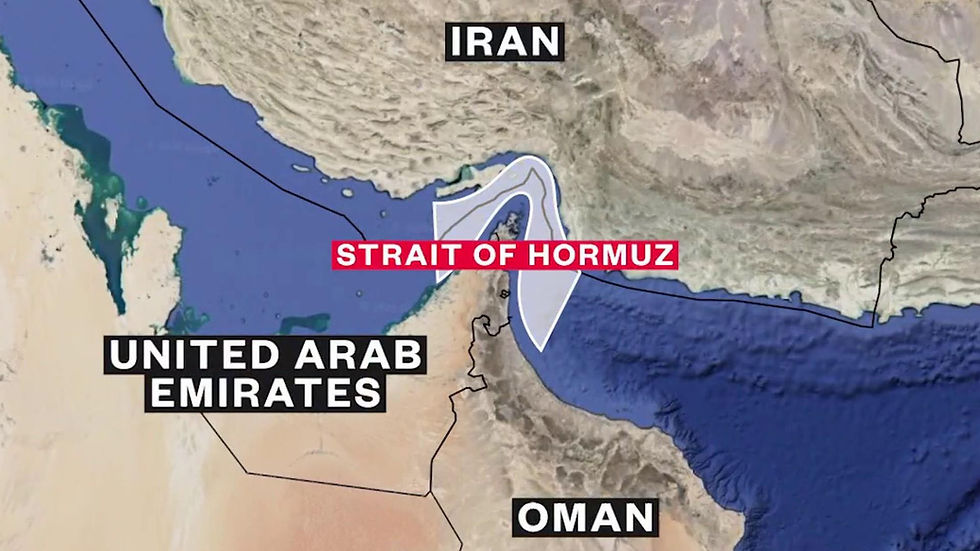
At the same time, Iran has taken a defiant stance diplomatically and militarily. Leaders have rejected ceasefire demands, refused to reopen key shipping routes like the Strait of Hormuz without concessions, and warned of escalating retaliation if attacks continue.
Iranian messaging also emphasizes resilience and sovereignty. Officials consistently state that the country will not yield under pressure, portraying the war as a struggle against foreign interference and framing their response as defensive and justified.
In short, while U.S. officials highlight a daring and successful rescue, Iran presents a counter-narrative: one of contested facts, military resistance, and a broader accusation that the war itself is illegitimate and driven by political motives.
What the Footage Is Actually Showing You

Iran is pushing its own narrative—no question.
But here’s what makes this different:
They’re showing you evidence.
Burned aircraft.
Crash sites.
Geographic consistency.
Meanwhile, the U.S. is asking you to trust:
Carefully worded statements
Anonymous officials
Explanations that require belief over observation
And in 2026, that’s a problem.
Because people aren’t just listening anymore.
They’re comparing.
And what they’re seeing doesn’t feel like a controlled demolition.
It looks like combat loss.
The Bigger Pattern They Don’t Want You to Focus On

This isn’t just about one mission.
Look at the broader picture of reported U.S. losses:
Multiple F-15E Strike Eagles lost (including friendly fire incidents)
An A-10 shot down during rescue operations
An F-35 damaged by Iranian air defenses
An E-3 AWACS—one of the most critical battlefield assets—destroyed
KC-135 tankers crashed and damaged
17 MQ-9 Reaper drones lost in weeks
Multiple helicopters damaged across Iraq and Iran
Let’s translate that.
That’s billions of dollars in losses. That’s capability disappearing. That’s not dominance—that’s friction.
Or simpler:
You don’t lose this much equipment in a war that’s going “according to plan.”
A Reality Check From Someone Who’s Been There

I’m going to say this plainly.
In real-world operations, aircraft don’t just “become immobilized” in clusters unless something bigger is happening.
One aircraft going down?
That’s a problem.
Multiple aircraft in the same operation?
That’s a system-level failure.
You don’t lose multiple aircraft in a “successful” mission.You survive it.
And there’s a difference.
But wait. We'll come back to this...
Aviation Note: What Propeller Blades Reveal in an NTSB Investigation

When the National Transportation Safety Board investigates an aircraft mishap, propeller blades are one of the most telling pieces of evidence on the entire crash site. Even when the aircraft is destroyed, the prop can still “speak.”
Here’s what investigators typically look for:
Here’s what investigators typically look for:
Was the Engine Producing Power?
One of the first questions: Was the engine running at impact?
S-bending / twisting of blades → Indicates the propeller was turning under power
Chordwise scratching (front-to-back scoring) → Suggests rotation at impact
Minimal damage / straight blades → May indicate little or no engine power
In simple terms: If the prop is chewed up and twisted, the engine was likely working. If it’s clean and intact, something may have failed before impact.
2. Blade Pitch and Configuration
Investigators examine the blade angle (pitch) at impact:
Fine pitch (low angle) → Typical for takeoff/climb, high RPM
Coarse pitch (high angle) → Cruise configuration
Feathered blades → Indicates engine shutdown (common in multi-engine aircraft)
This helps reconstruct what phase of flight the aircraft was in or whether the pilot attempted emergency procedures.
3. Pre-Impact vs Post-Impact Damage
Not all damage is created equal.
Leading edge gouges, bending, and tearing → Likely occurred at impact
Uniform burning or melting → May be post-crash fire damage
Polished or smeared metal → High-energy rotation before impact
The NTSB distinguishes between:
Damage caused during flight/impact
Damage caused after the crash (fire, explosion, environment)
4. Direction and Energy of Impact
Propeller deformation can also show:
Direction of rotation at impact
Whether the aircraft struck nose-first, flat, or at an angle
Relative energy of the crash
A deeply buried or heavily curled prop often signals high-energy impact, while lighter damage can indicate lower-speed or controlled descent scenarios.
5. Corroborating the Story
Propeller evidence is rarely used alone.
It’s combined with:
Engine teardown analysis
Flight data (if available)
Witness statements
Wreckage distribution
But in many cases, the propeller becomes a key truth-teller—especially when other systems are too damaged to analyze.
Bottom Line
Propeller blades act like a forensic fingerprint of the engine at the moment of impact.
They can tell investigators:
Whether the engine was producing power
What the pilot may have been doing
Whether a failure occurred before or after the crash
In aviation mishap investigations, twisted metal isn’t just wreckage—it’s evidence.
The Math Ain't Mathing
STATEMENT FROM THE WHITE HOUSE
The United States can confirm that, during a time-sensitive combat search and rescue (CSAR) operation in southern Isfahan, two U.S. military aircraft were intentionally scuttled by American personnel on the ground.
These aircraft became non-operational in a contested environment and could not be safely recovered or extracted. In accordance with established military protocols, U.S. forces made the deliberate decision to disable and destroy the aircraft to prevent the compromise of sensitive equipment, advanced avionics, secure communications systems, and classified technologies.
At no point were these aircraft abandoned intact.
The priority of the operation remained the recovery and safe return of U.S. personnel. A follow-on extraction force successfully secured all individuals involved, and all personnel were safely evacuated with no confirmed loss of life.
The decision to scuttle the aircraft reflects the professionalism, training, and discipline of U.S. forces operating under complex and hostile conditions. Safeguarding critical national security capabilities—while ensuring the recovery of our personnel—remains a core principle of U.S. military operations.
The United States will continue to take all necessary measures to protect its forces, preserve its technological advantage, and complete its missions.
Are they SURE these aircraft were intentionall scuttled on the ground?
EXHIBIT A
EXHIBIT B

The Narrative Doesn’t Match the Evidence
What we’re being told and what we’re being shown are not lining up.
Images released by Iranian media—and increasingly analyzed by independent observers—clearly show destroyed U.S. aircraft scattered across terrain in southern Isfahan. Those visuals are consistent with broader reporting that multiple aircraft were lost or abandoned during the rescue mission.
The White House narrative is that these aircraft were deliberately scuttled by U.S. forces after becoming inoperable, as part of a successful extraction.
But the imagery raises serious questions:
The extent and pattern of destruction appears more consistent with high-energy damage than controlled demolition
The number of aircraft involved suggests a larger operational breakdown than publicly acknowledged
The battlefield context, including reports of multiple aircraft losses across the theater, challenges the idea of a contained, successful mission
At the same time, Iranian officials claim their forces shot down multiple U.S. aircraft during the operation, a claim that remains unverified—but is being reinforced by the visual evidence now circulating.
That leaves the public in an uncomfortable position:
Two competing narratives. One set of images. And a growing gap between them.
Even U.S. reporting acknowledges that aircraft were destroyed on the ground after becoming unable to depart, underscoring that the situation on the ground was far more complex than a clean, controlled operation.
Bottom Line
The White House is asking the public to accept that:
Multiple aircraft were lost
All were destroyed intentionally
The mission was fully successful
And no broader issues exist
But the available evidence—visual, analytical, and contextual—does not fully support that version of events.
At minimum, this was a mission that went significantly off plan. At worst, it may represent a level of loss and risk that is not being fully disclosed.
In modern conflict, the truth is no longer controlled by press briefings alone.
It’s shaped by:
Images
Open-source analysis
Competing narratives in real time
And right now, those elements are telling a story that feels far less certain than the one coming out of Washington.
When the narrative requires more explanation than the evidence, doubt isn’t unreasonable—it’s inevitable.
Desert One vs. Now — Same Ground, Different Truth

The last time American aircraft were destroyed on Iranian soil was during Operation Eagle Claw.
Back then:
A helicopter collided with a C-130
Eight Americans died
The mission failed
The world saw everything
It was a disaster.
And it was public.
Now fast forward.
Aircraft destroyed on Iranian soil again.
But this time:
No casualties (we’re told)
Mission success (we’re told)
Narrative tightly controlled
Here’s the real difference:
In 1980, we failed and told the truth. In 2026, we might be failing—and telling a better story.
Hood Logic — Because This Ain’t Complicated
Let’s take this out of the Pentagon and into real life.
Go to any barbershop and say:
“Three aircraft went down inside Iran. Nobody died. Mission was a success.”
Watch how fast somebody responds:
“Ain't nobody die? Man… that don’t sound right!”
Because it doesn’t.
And it doesn’t take classified intelligence to feel that.
Just common sense.
The Leadership Problem Nobody Wants to Say Out Loud

This lands on leadership.
Trump.
Hegseth.
The Pentagon.
Because this isn’t just about one mission.
This is about credibility.
When leadership:
Minimizes losses
Reframes setbacks as success
Controls the narrative tighter than the battlefield
You don’t get transparency.
You get messaging.
And here’s the danger:
Once the gap between reality and narrative gets too wide, people stop trusting both.
What We Know vs. What We’re Told
What we know:
American aircraft are destroyed inside Iran
Footage confirms real wreckage
Multiple systems across the theater are being lost or damaged
What we’re told:
The destruction was intentional
The mission was a success
There were no casualties
And sitting between those two realities is one uncomfortable question:
What aren’t we being told?
The Truth is in the Wreckage

The burned aircraft in Isfahan are real.
That’s not propaganda.
The only question is what they represent.
To Iran, it’s a victory.
To the U.S. government, it’s a success story.
But to anyone paying attention?
It’s evidence of a war that is far more costly, complicated, and contested than the American public is being told.
And maybe the most telling detail of all:
If the war was going as well as they say…they wouldn’t have to explain it this much.
CALL TO ACTION
Don’t just consume the narrative.
Interrogate it.
Compare what you’re told with what you can see
Question explanations that feel too clean for messy situations
Push back on narratives that don’t add up
Because the biggest danger in war isn’t just what happens on the battlefield.
It’s what people are convinced to believe about it.
This doesn't look like a "successful rescuse mission" to me.


Comments