


The Real Shutdown Fight: Healthcare Subsidies, Plain and Simple

Introduction — They’re Shutting Down the Government Over Your Doctor’s Bill
Picture this. You wake up on a Monday, open your email, and see that your health insurance premium just jumped from $320 to $680. Nothing changed — not your job, not your health, not your income. Just Congress, again, playing chicken with your doctor’s bill.
They’ll tell you the shutdown is about “fiscal responsibility” or “the border.” But peel back the slogans, and you’ll find the same fight that’s been haunting D.C. since 2010: Affordable Care Act subsidies — the rebates that make your health insurance actually affordable.
More than 24 million Americans depend on those subsidies right now. They were expanded during the pandemic and extended through 2025, a political time bomb Congress set years ago to “deal with later.” Well, later is now. Furthermore, the GOP's assertion that Democrats "created their own problem"; well, that's not exactly accurate. As a refresher, back in 2013, 39 House Democrats defected and voted in favor of a "GOP fix to Obamacare".
Allow me to digress...
Republican Logic
Republicans claimed that many Americans had been told: “If you like your health insurance plan, you can keep it.” Then, under the ACA’s rollout, millions of people got cancellation notices because their old plans didn’t meet the new ACA standards. The GOP’s "fix" was pitched as correcting a broken promise—letting people keep their existing non-compliant plans for a longer period or indefinitely. “You like your plan, you keep it” was turned into legislative leverage. They argued that forcing people out of their old plans and into ACA-compliant plans was politically and practically disastrous. So their fix was presented as a relief effort for consumers.
But - and this is a BIG but - Republicans really viewed this as an opening to undermine or roll back parts of the ACA by making the exempt plans available, thus weakening the new marketplace structure and the regulatory regime behind it. If all those canceled plans stayed alive, the insurance “risk pool” dynamic changes (you have healthier people staying in older, potentially more generous plans), raising premiums and destabilizing the new marketplace the ACA built. (Raising premiums...sound familiar?)
Even back in 2013, Democrats feared that the outcome of the "fix" would be double-digit premium hikes down the road. Even then, Democrats recognized the strategy: the GOP "fix" was a way to chip away at the ACA’s structure—while disguising it as consumer protection. Thus, Democratic leaders called it a “Trojan horse” to dismantle the ACA entirely.
When 39 Democrats defected, it gave the GOP an argument of bipartisanship to carry forward the fix—not just a purely partisan effort. The GOP said: “See, even Democrats in tough districts back this consumer relief.” Ultimately, Republicans forced the White House and Democrats into a corner: either adopt the fix (thus weakening the full ACA) or reject it and appear unsympathetic to people losing their plans.
So how did we get from a 2013 vote to a 2025 deadline?
Buckle up...
🧩 1. 2013 — The “If You Like Your Plan” Crisis
After the ACA rollout, millions received cancellation notices for non-compliant health plans.
Republicans pounced, saying “Obama lied, your plan died.”
The Upton Bill (the GOP “fix”) let insurers keep selling those old plans temporarily.
39 Democrats defected to vote for it, giving the GOP political cover.
President Obama, under pressure, announced an administrative fix allowing state insurance commissioners to grandfather old plans for one more year.
👉 This “transitional fix” wasn’t meant to last. It was a political Band-Aid — but it proved how politically explosive healthcare disruptions were. Both parties learned: when premiums rise or coverage disappears, voters revolt.
🏛️ 2. 2014–2019 — “Repeal and Replace” Era
Republicans spent the Obama and early Trump years promising to repeal the ACA entirely, but they could never agree on what to replace it with.
During this period, the individual mandate penalty was gutted, and cost-sharing reduction payments were halted by the Trump administration in 2017.
Those moves raised premiums for unsubsidized consumers and forced insurers to adapt with “silver loading” (baking lost CSR payments into premiums).
The chaos convinced moderates — and even some conservatives — that you can’t rip out subsidies without hurting working- and middle-class voters.
👉 Lesson learned: killing subsidies is political suicide.
💸 3. 2020–2021 — The Pandemic and the American Rescue Plan
Then came COVID-19.
Millions lost jobs and employer health insurance.
Democrats saw an opening to super-charge ACA subsidies as part of pandemic relief.
So the American Rescue Plan Act (ARPA) in 2021 made subsidies:
Bigger — capping premiums at 8.5% of income.
Broader — no upper-income cutoff.
Temporary — for 2021–2022 only, because it was a pandemic “emergency measure.”
👉 This was a direct policy descendant of the 2013 crisis: Washington learned that affordability gaps are politically lethal, so it overcorrected with generosity.
🏗️ 4. 2022 — The Inflation Reduction Act Extends It to 2025
As ARPA’s enhanced subsidies neared expiration, Democrats knew letting them lapse before the 2022 midterms would be a political disaster.
The Inflation Reduction Act (IRA) extended them through 2025.
Why 2025? Because:
Budget optics — limiting the extension kept the IRA’s price tag “deficit-neutral” on paper.
Strategic timing — it synced with the expiration of Trump’s 2017 tax cuts, giving both sides a future bargaining chip in the next “grand fiscal deal.”
Political leverage — whoever wins the White House in 2024 decides whether to make the subsidies permanent or let them die.
So the short-term “emergency fix” born out of the 2013 crisis eventually morphed into a structural pillar of the ACA — one strong enough that even Republicans tread carefully around it now.
🔄 5. 2025 and Beyond — The Permanent Question
By pushing the sunset to 2025, Congress essentially kicked the can to the next administration. But by then, these subsidies will have been in place for four years and will cover tens of millions of voters. That makes them politically sticky — hard to repeal, easy to campaign on.
👉 What began as a 2013 patch for angry policyholders evolved into a core entitlement of modern American healthcare.
🧠 Bottom Line
2013: GOP “fix” tried to let people keep old plans → revealed how fragile affordability politics are.
2017: GOP repeal attempt fails → public backlash cements ACA’s survival.
2021–2022: Democrats turbo-charge subsidies under COVID relief → success turns temporary.
2022–2025: Inflation Reduction Act locks in extensions → subsidies now de facto permanent unless actively repealed.
So ironically, the Republican attempt to weaken Obamacare in 2013 helped teach both parties the same lesson:
Mess with people’s healthcare, and you lose elections.
That’s why the fight today isn’t over whether to have subsidies — it’s over how long and with what conditions.

But What Really Are Healthcare Subsidies — and Why Do They Exist?
Let’s strip away the jargon.
A healthcare subsidy is the government saying, “We’ll help cover part of your premium so you don’t drown in bills.” If your insurance plan costs $800 a month, the federal tax credit might chop that down to $300. The rest is on Uncle Sam.
When the Affordable Care Act (ACA) was born, lawmakers faced a deadly paradox:
People needed coverage.
Private insurance was too expensive.
Without healthy people buying in, the whole market would collapse.
So subsidies became the balancing rod that kept the system upright. They weren’t handouts — they were structural glue.
👉 The moral rationale: Healthcare shouldn’t be a luxury item.
👉 The economic rationale: Shared risk keeps premiums stable for everyone.
👉 The political rationale: It’s cheaper to help people afford private coverage than build a new government program from scratch.
That’s why subsidies are the heartbeat of the ACA. Take them away, and the pulse stops.
How the System Works — Two Kinds of Help
Premium Tax Credits (PTCs) – These are your monthly discounts. During COVID, Congress made them bigger and available to more people, capping what you pay at 8.5% of your income. That expansion kept millions insured who otherwise would’ve gone bare.
Cost-Sharing Reductions (CSRs) – These lower your out-of-pocket costs. They make the difference between seeing your doctor for $10 instead of $60, and having a $1,000 deductible instead of $5,000.
PTCs help you get in the door. CSRs help you stay inside once you’re there.
Why They Expire in 2025 — The Political Time Bomb
So why set the clock to run out? Because Washington loves leverage.
The “enhanced” subsidies were born in the American Rescue Plan (2021) and extended under the Inflation Reduction Act (2022). But lawmakers limited them through 2025 for three reasons:
Budget optics — Keeping them temporary made the bill look cheaper.
Timing — 2025 lines up with the expiration of Trump’s tax cuts, setting the stage for a massive fiscal brawl.
Political leverage — Whoever controls Congress in 2025 gets to rewrite the next chapter of healthcare funding.
In other words: the date was never about healthcare — it was always about control.
Why This Matters Right Now
If these subsidies vanish, the average Marketplace premium could double — up 114%. Families that pay $400 a month could soon owe $800 or more.
That’s not belt-tightening; that’s economic strangulation.
And the ripple effect?
Hospitals face more unpaid bills.
Small businesses drop coverage for owners and employees.
Rural clinics close their doors.
States pick up billions in emergency care costs.
Yet this isn’t an abstract policy fight. It’s real people — nurses, barbers, teachers, Uber drivers — who will feel the squeeze first.
The Fault Line Inside the House
Let’s call it plain:
Democrats say: Don’t punish working families. Extend the subsidies — even a year at a time — and reopen the government.
Moderate Republicans whisper: Okay, maybe short-term, but add fraud protections or income checks.
Hardliners growl: End the subsidies altogether! They call them “pandemic welfare” and want to tack on Medicaid work requirements as the price for negotiation.
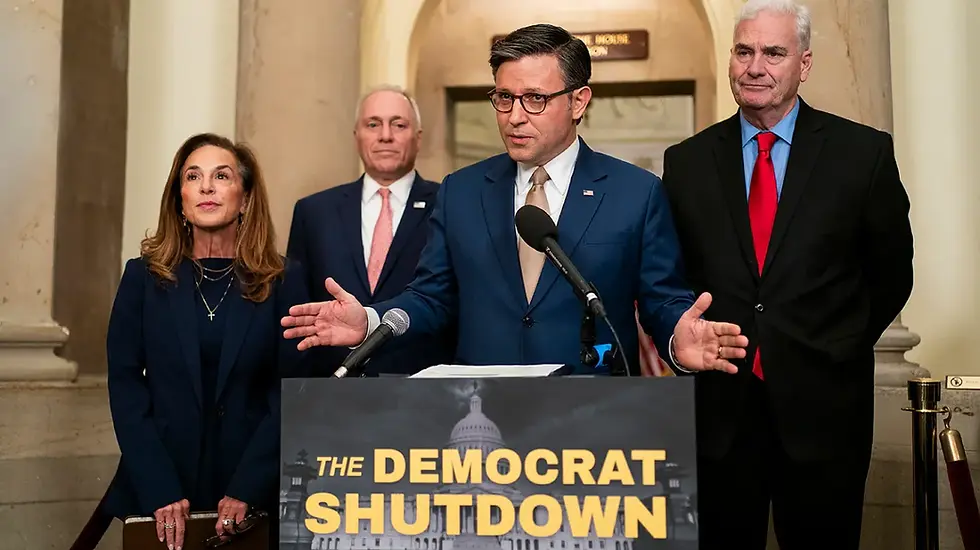
And sitting in the middle is a Speaker held hostage by his own conference, trying to satisfy a minority faction that would rather torch the house than fix the wiring.
Meanwhile, the President wants broader leverage over health dollars. Why? Because that control lets the White House move fast — redirect funds during crises, negotiate drug prices, and make health policy the centerpiece of a campaign promise. In politics, who controls the money controls the message.
The Real Ideological Divide — Market vs. Mercy
Republicans call subsidies a market distortion. Their argument:
Subsidies hide the true price of healthcare.
People overuse what they don’t fully pay for.
That drives up prices system-wide.
Their fix? “Let the market breathe.” Translation: make people pay more so they’ll use less.
Democrats counter: That’s not breathing — that’s suffocating.
Without subsidies, people don’t magically shop smarter — they just skip care. Then hospitals eat the bill, insurance pools shrink, and everyone’s costs climb.
At its core, this is a philosophical standoff:
One side believes healthcare is a commodity. The other believes it’s a right.
The Trust Issue — Why Democrats Don’t Believe the GOP Will Negotiate Later
Democrats say, “We’ve seen this movie before.”
2013: Republicans shut down the government over Obamacare funding, promised to negotiate later — never did.
2011 & 2023 debt ceiling fights: Same story. Promises made, promises ghosted.
So Democrats figure: if we reopen now, they’ll pocket the win and walk.
Republicans argue shutdowns aren’t the place for policy, but given their own track record, Democrats’ skepticism is more scar tissue than paranoia.
Why This Fight Hits Black and Working-Class Families Hardest
In states that didn’t expand Medicaid — mostly in the South — Marketplace subsidies are the lifeline for Black and Latino families. Remove them, and the coverage gap widens fast.
This isn’t theoretical. It’s historical déjà vu. The same demographic that got left behind after Reconstruction, after redlining, after integration, after welfare reform — will once again get left behind when healthcare affordability becomes optional.
And that’s the cruel irony: the people most harmed by losing subsidies are the same ones Republicans claim they’re “saving from dependency.”
The Real-World Impact — Beyond the Politics
Families: $4,000–$6,000 a year in higher costs if subsidies expire.
Hospitals: $10 billion more in unpaid care nationwide.
States: 2 million people losing coverage, with ripple effects on Medicaid.
Economy: Lower consumer spending, higher medical debt.
This shutdown isn’t just about the federal budget — it’s a stealth tax on the middle class.
The Blame Game — Call It What It Is
Let’s be real: The House GOP is holding the country hostage over ideology.
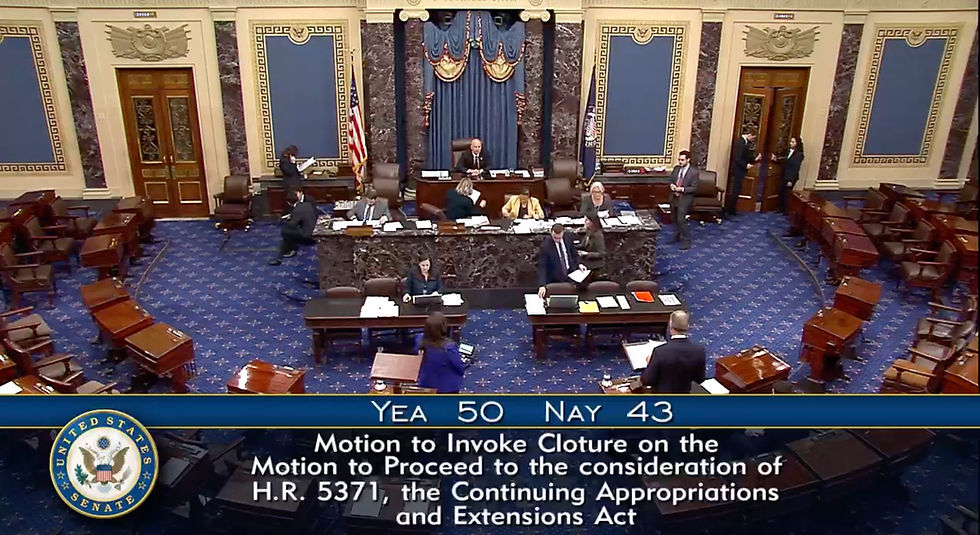
Democrats already scaled back from “make it permanent” to “just extend it one year.” Senate Republicans want to reopen government before negotiating. But House hardliners refuse any deal without ideological riders — and that’s what’s jamming everything.
This isn’t fiscal conservatism; it’s performative cruelty.


How the 1% Pimp the Shutdown
Man, listen — when folks say “this shutdown ain’t just about the budget — it’s a stealth tax on the middle class,”they’re not talking in riddles. What they’re saying is: while regular people sweating bills and grocery prices, the rich already moved their chess pieces.
See, shutdowns don’t shut down money. They just reroute it — outta your pocket, straight into somebody else’s portfolio.
Let’s break down the hustle:
💸 1. The Panic Play — “Buy Your Fear, Sell It Back Later”
When that shutdown news hits, stocks dip, folks panic, and some start cashing out retirement funds just to breathe. Meanwhile, the 1% — sitting on stacks of cash — are quietly buying everything you just dumped. When the market rebounds after the crisis? They make money on your fear. They don’t panic. They prepare.
🏦 2. The Treasury Trick — “Loan Shark in a Suit”
Shutdown or not, the U.S. still borrows money — through Treasury bonds. Big banks and hedge funds swoop in like sharks: “You need to borrow? Cool, we’ll handle that… for a fee.”So while the country’s broke, they’re making bank off the debt. You stressing over rent, they cashing interest checks from Uncle Sam.
🏠 3. The Recession Repo — “Fire Sale for the Wealthy”
When government paychecks stop, contracts freeze, and small businesses choke, people start selling off what they can’t hold. That’s when the rich go shopping. Houses, land, companies — all going cheap. They buy low in your storm, then sell high in the sunshine. That’s not luck. That’s strategy.
⚖️ 4. The Rules Reset — “While You’re Distracted”
During a shutdown, agencies like the SEC and EPA are half-asleep. No inspections. No fines. No oversight. Corporations slide through loopholes, merge quietly, or pollute without penalty. By the time the lights come back on, the deals are done and the damage is baked in.
🧾 5. The Inflation Flip — “They Own the Stuff That Rises in Price”
Prices go up when government stops spinning — gas, food, credit rates. You feel it immediately. But the wealthy? Their assets rise with inflation — stocks, property, gold. So while you pay more at the pump, they make more from their portfolios. That’s the stealth tax right there — invisible, but deadly to your budget.
🧠 6. The Aftermath Move — “Rewrite the Playbook”
Once the crisis passes, the 1% lobby for “reforms” — which really means less regulation and more privatization. Translation: turning public struggle into private profit. That’s the same play every time — let the people hurt just long enough to justify a corporate takeover.
⚙️ The Shutdown Hustle in One Line
Create chaos → cause fear → buy cheap → change the rules → cash out.
It’s not politics. It’s business — and you’re the business model.
💬 The Real Question
So while they’re stacking, what’s the counter-move for the rest of us?
Hold your assets — don’t panic-sell what’ll recover.
Buy strategically — even small investments in downturns pay off later.
Organize locally — the 1% think nationally; we need to move collectively.
Vote like investors — not like fans. Watch who’s protecting your wallet.
Ghetto Philosopher Truth: Shutdowns ain’t accidents. They’re opportunities — but only for those who know the game. If we don’t learn the rules, we’ll keep playing defense in an economy that’s already rigged.
What a Compromise Could Look Like
12–24 month extension of enhanced subsidies.
Stronger verification to keep fraud low.
No Medicaid work requirements attached.
Transparency clause: Every household sees exactly how much the government is contributing to their premium.
That’s a deal both sides could defend. The votes are there. The willpower isn’t.
Myths vs. Facts (Quick Hits)
🧱 Myth: Subsidies are handouts.
✅ Fact: They stabilize the entire insurance market and help working families stay covered.
🧱 Myth: Ending subsidies saves money.
✅ Fact: It shifts the cost to hospitals and taxpayers when uninsured patients flood ERs.
🧱 Myth: Democrats are holding the government hostage.
✅ Fact: Democrats are defending a program with broad voter support — the House’s own civil war is the real hostage-taker.
The Bigger Picture — America’s Never-Ending Healthcare Wars
Every major step forward — Medicare (1965), CHIP (1997), ACA (2010) — was met with the same cries of socialism. Every single time, the programs proved essential. This fight is just the latest verse in a very old song: progress vs. paranoia.
What You Can Do
✅ Check your Marketplace account. See how much more you’ll pay if the subsidies disappear.
📞 Call your Representative. Especially if they’re in a swing district. Tell them: extend the ACA subsidies, clean and simple.
💬 Spread the word. Tell folks at work, at church, and in the barbershop — this shutdown is about your healthcare, not the border.
🗳️ Vote accordingly. If your Rep voted to keep the government closed, they voted to raise your premiums. Remember that in November.
Conclusion — The Real Cost of the Shutdown
They call it a shutdown. But really, it’s a shake-down — on your healthcare, your paycheck, and your peace of mind.
This isn’t about the size of government; it’s about the size of your next medical bill.
If Congress lets those subsidies die, the working class pays twice — once in taxes, and again at the pharmacy counter.
And when the history books are written, it won’t say “Congress fought over fiscal discipline.”It’ll say “They fought over whether working Americans deserved to see a doctor.”
That’s the real battle under the shutdown. And it’s time the country saw it for what it is.

Comments